Showing posts with label BC plan examples. Show all posts

Monday, 22 October 2012

Healthcare service continuity

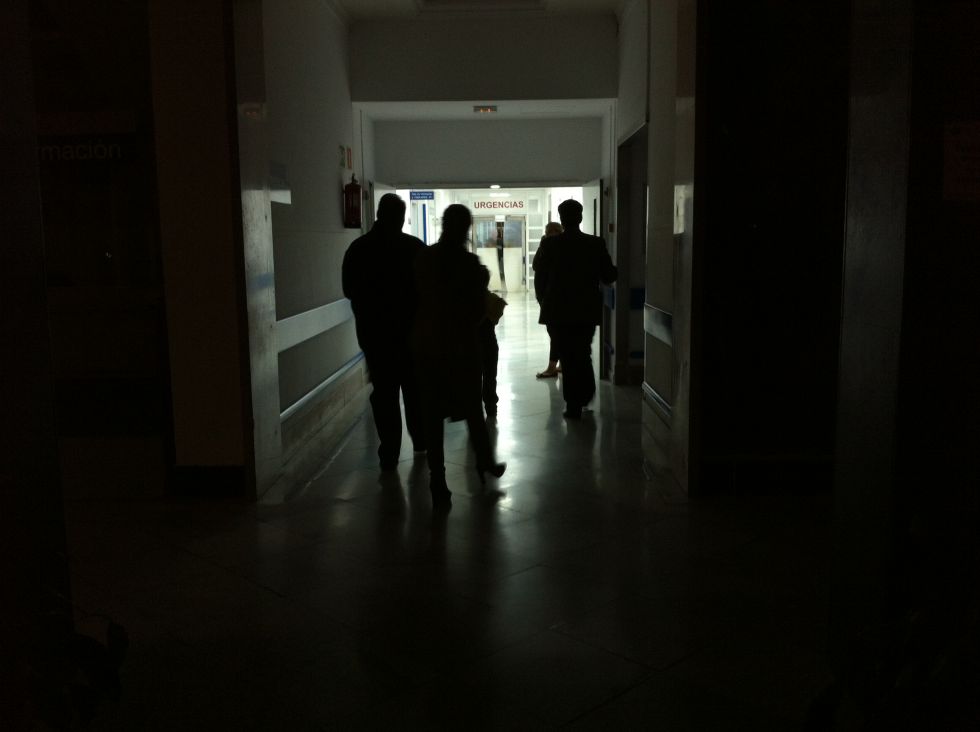
Blackout taken place in Fundación Jimenez Diaz hospital , last 16th of October in Madrid is a good example to realize that there is not necessary great disasters or disruption  to activate Business Continuity Plans.
Although we have not too much information about this incident, it can be clearely indenfied two tradicional continuity measures:
  • Power generators activation, to support critical systems
  • Redirection of new admissions to other hospitals, in this case the Hospital Clínico.
When we are talking about a hospital, such as I discuss in my previous post components supporting business, this service is so critical that  availability of all components supporting the service has to be granted, that is, facilities, suppliers, medical staff or information technology. Impact caused by lack of service is simply unaffordable because the life of patients is in play.

However, the incident occurred in Jimenez Diaz Hospital must make us think about if our health system is really prepared for emergency situation or disasters when hospitals are affected. 2004 terrorist attacks in Madrid realized that the emergency agency are prepared to deal with such a great disaster, but What would happen if the own hospitals were affected by the disaster?

In a hospital there are a lot of diverse healthcare services, with different criticalities: emergencies, maternity, hospitalization, operating rooms, doctor appointments, radiology,.... Strategies must be different depending on this criticality. For example, a pediatric appointment could be delayed or redirected to other hospital, but a serious patient that has to go through surgery or with dependation of ventilation can no be unattended and any delay can be fatal.

Having a look abroad, for example to United States, hospitals has a global framework since lasts 80s, called HICS (Hospital Incident Command System). This framework identifies different issues to be taken into account to assure healthcare service. HICS was born as a emergency specific framework (HEICS), but it nowadays is a system for use in both emergency and non-emergency situations. George W Bush govern created in 2003 a global framework to manage incidentes (NICS) and this caused a new revision or HICS which is the last version (version V).

About content, HICS identifies five management functions hat has to be defined in the hospital to manage incidentes:
  • Incident Command, set by different responsibles of safety, liaison and public information officers and the global responsible
  • Operations section concuct ths tactical operations.
  • Logistics Section: provides required resources to achived operational objectives.
  • Planning Section: Collects information about the incident, maintain resource status and infomration for reports and prepares documents, such as incident plan.
  • Finance and Administration Section: Monitors costs related to the incident and provides accounting, procurement, time recording, and cost analyses
The most important advantange of HICS is provides a common terminology and position titles to enhance standardization among agencies and responders

In Spain, with healthcare service tranferred to Autonomous Comunities and with the actual economic crisis it seems that this kind of initiatives are not a priority, altough from my point of view is an interesting tasks for CNPIC. At the end of the day hospitals should be considered critical infrastructure.

Friday, 7 September 2012

BYOD and Business Continuity

BYOD can be considered as a trend in the IT and is called to be developed during the following years, since this has a lot to do with mobility and telework. There has been users themselves, manly top management, who has introduced smartphones and tables into the offices when they realized that they were using their shabby professional mobiles more regularly than their brand new iphone and they began to invert this trend, forcing their CIOs to allow access to their email, agenda and other applications. This means that, instead of being the product of a marketing strategy or the conclusion of trends report by a high level consultancy company (surely they are going to include in it from now), is the result of an increasingly widespread practice.

From a technical point of view, BYOD is going to be a revolution in the workstation world that will require procedures update, new tools for manage the devices and new security policies. Security and legal issues will be probably most affected by this trend, with a lot of voices form security experts rising against it because of the violation of traditional security dogmas of access control al data loss prevention. That’s why there are a lot of comments in forums and a rising market about device protection tools to avoid happened situation like the one affected to the Spanish Homeland Security Department Minister, who loses his ipad. Most of this tool were available before and has been named with the fashion acronym (BYOD compliance…)
From Business Continuity perspective, BYOD doesn’t bring a great change, since will be very similar to remote access policies in which users usually take care of the expenses of Internet connection or even the computer they use to access to company’s intranet. In the same way they do to remote access, BC manager, usually with Human Resource department, should assure the following:
  • Employee give consent to use their own resources to a professional use.
  • Employee owns the required resources to carry out activities they have to do in a crisis or contingency situation. The better way to do this is involving the user when inventory of their own resources periodically.
  • Employee resources comply with company security and feature politics and procedures.
Apart from that, as every BC resource, BC manager should assure the information in the inventory will be updated continuously. In order to do that, the best option is to automate the process with tools like Workforce Assessment by SunGards AS, in which inventory and update process are done with a web form and is stored in a relational database. This allows using this information later, when defining BC strategies and procedures. And of course these resources have to be included in the exercising program.

Wednesday, 28 March 2012

BCAW webminars

This are the webminars deployed regarding the Business Continuity Awareness Week, sponsored by BCI.

Adopting Cloud In Your Backup Strategy
BCM Frameworks: From Best Practices to Standards to Overarching Models
Burst out of you own personal silo, Find out who else is interested in disasters
Business Continuity Awareness for Senior Management
Business Continuity in the Supply Chain
Business Continuity Management Systems
CM² Maturity Model
Conscientisation pour la continuité des affaires auprès de la direction
Contact Centre Continuity
Continuity as a Service (CaaS)
Corporate Business Impact Analysis-Why Bother?
Cyber Preparedness-Time is Not on Your Side
Establishing a Governance framework for an effective BCM
Getting Started with BCM
Horizon Scanning - What could Business Continuity look like in 2040
Horizon Scanning, new threats, new skills, new challenges the next 5 years
How to check your Business Continuity Management System?
How to Effectively Use Social Media Before and During Disasters
How to Successfully Implement a Business Continuity Management Program..
Identifying Key Suppliers
Infrastructure Impact Analysis
Integrating Cyber Threat Protection and Business Continuity Planning
ISO 22301 Business Continuity Management Systems
Learning from Earthquakes, Non-Structural Retrofitting and Other Mitigation Meas
Preparing for the 2012 Games- What should you do in the time left?
Preparing for the 2012 Release of ISO 22301
Preparing your Communications Strategies for London 2012
Puzzle Pieces: Are You Seeing the Entire Planning Landscape
Risk Management Strategies for Protecting Enterprise Supply Chains
Why a formal certified BCMS? “Due Diligence”-Talking the Language Management

Tuesday, 30 August 2011

Home Continuity

Regardless of the difference between different cultures, we can identify different scenarios that could be more or less common when talking about home business continuity. Analyzing five components supporting the business identified in the standard BS25999-1, we can determine the following:
  • People: It would consist of the inhabitants of the home, whether family, people who share a flat, etc..
  • Premises :  including home plus appendices (garages, etc.)
  • Information, in both formats: paper and electronic. We all have documents in our homes that could be important e irreplaceable, such as contracts, deeds, official documents, etc.. Furthermore, an increasing amount of information in electronic: photos, videos, documents in our HDD, etc.
  • Technology : perhaps less critical component, since their service is personal and easily restorable.
  • Supplies: traditionally four: electricity, water, gas and telephone.
The following step is define the scenarios that could be part of the scope of our home continuity program and that can be identified as more probable or not depending on the threats of the area in which the home is located. Some examples of scenarios could be:
  • Loss of information (mainly in hdd)
  • Power outage, with different durations
  • Flood
  • Fire
  • Severe Inclement weather: heavy snow or storms, Hurricane
  • Big disasters: Earthquakes, nuclear incidents, etc.
Some of this scenarios are more or less common. For example, some years ago there was a gas blast
50 meters from my house. Although we can think that a lot of damage can be covered by insurance, perhaps there are things that can not be restored with money.

If we analyze the firs scenario of above, sure it has happened to a lot of people: we can loss all information in our hdd, including photographs, videos, etc, so our home continuity program must define the mechanisms that we're going to use to safeguard the information There are some options, like burn CDs and carry them to a different location (the hose of a relative, for example) or upload photos or videos to a cloud service, like google drive or dropbox.

We have to continue with the other scenarios in order to develop our hole Home Continuity Plan and be sure that we are not going to loss what we store in our homes. Testing would be funny, specifically if you have young children.